

The Top Signs Your RV Roof Needs Immediate Attention (Before It Costs You Thousands)
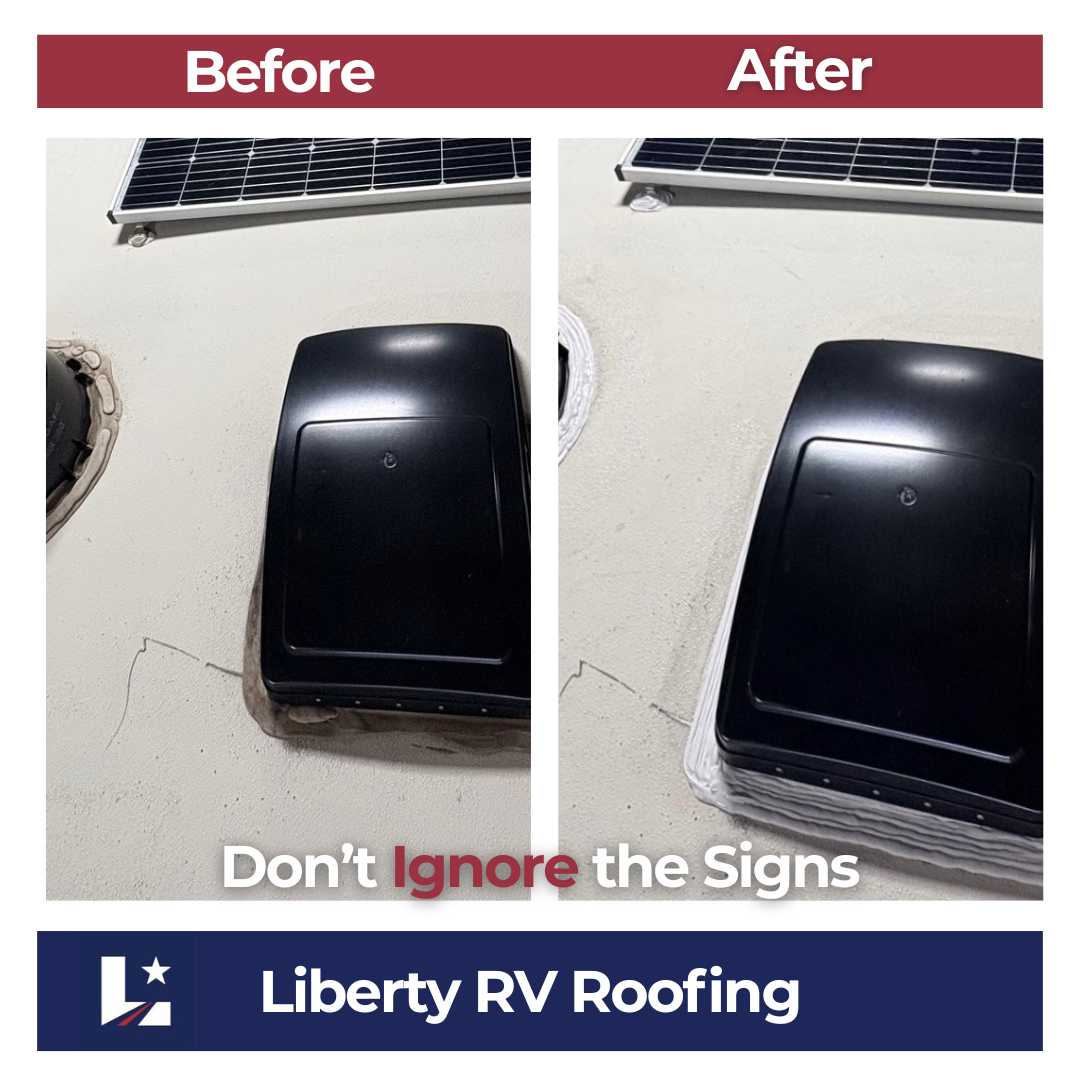
Sealant failure vs. professional restoration with Maxxseal SSL.
The Top Signs Your RV Roof Needs Immediate Attention
Most RV roof damage doesn’t happen overnight.
It starts small — a cracked seal, a loose vent or minor weather wear — and slowly turns into water intrusion, structural damage and expensive repairs.
The problem?
Most RV owners don’t notice until it’s too late.
In this guide, we’ll break down the clear warning signs your RV roof needs immediate attention, how damage spreads and what to do before it turns into a major repair.
Why Early Detection Matters
Your RV roof protects everything underneath it — insulation, wiring, interior panels and structure.
Once water gets in:
It spreads quickly
It weakens materials
It causes mold and rot
It leads to expensive repairs
Catching problems early can mean the difference between a simple reseal and a full roof replacement.
1. Cracked or Dried Sealant
Sealant is the most common failure point on any RV roof.
Over time, exposure to sun, heat and weather causes it to:
Dry out
Crack
Shrink
Pull away from seams
This creates small openings where water can enter.
👉 Most RV leaks start here.
2. Soft Spots on the Roof
If your roof feels:
Spongy
Uneven
Weak under pressure
This usually means water has already penetrated and damaged the underlying decking.
Soft spots are a serious warning sign that structural damage may already be present.
3. Water Stains Inside Your RV
Interior water stains are one of the most obvious signs of roof failure.
Look for:
Yellow or brown ceiling stains
Wall discoloration
Bubbling panels
Musty smells
By the time you see these, the issue has likely been developing for weeks or months.
4. Peeling or Bubbling Roof Material
If your roof membrane is:
Bubbling
Peeling
Separating
It may indicate:
Trapped moisture
Adhesion failure
Advanced roof deterioration
This often leads to larger sections of roof damage if ignored.
5. Loose or Damaged Roof Components
Check areas around:
Vents
Skylights
AC units
Antennas
If these components shift or loosen, they create gaps where water can enter.
Even small movement can break the seal.
6. Visible Cracks or Tears in the Roof
Cracks and punctures can come from:
Tree branches
Debris
UV damage
Age
Even a small tear can allow water to enter and spread across the roof structure.
7. Mold or Musty Odors
If your RV smells damp or musty, it may indicate hidden moisture inside walls or ceiling cavities.
Mold growth can:
Damage materials
Affect air quality
Spread quickly
This is often a sign of long-term water intrusion.
8. High Humidity or Condensation Inside
Excess moisture inside your RV can be a sign that water is entering from above — even if you don’t see visible leaks yet.
What Happens If You Ignore These Signs?
Ignoring early warning signs can lead to:
Rotted roof decking
Structural damage
Electrical issues
Mold growth
Full roof replacement
Repairs that could have cost hundreds can quickly turn into thousands.
How to Prevent RV Roof Damage
The best way to avoid major repairs is simple:
✔ Inspect your roof twice per year
✔ Check sealant regularly
✔ Address small issues immediately
✔ Keep your roof clean
✔ Schedule professional inspections
Prevention is always cheaper than repair.
Why Professional Inspections Matter
DIY checks are helpful, but professionals can detect:
Hidden leaks
Weak seams
Early membrane failure
Structural concerns
At Liberty RV Roofing, we inspect all roof types — EPDM, TPO, PVC, and fiberglass — and identify issues before they become expensive.
Don’t Wait Until It’s Too Late
If you notice any of these signs — or if it’s been a while since your last inspection — now is the time to act.
🔍 Schedule your FREE RV Roof Inspection today
No pressure. No obligation. Just expert advice.