How Often Should You Inspect Your RV Roof?
Regular RV roof inspections help prevent leaks, water damage and costly repairs. Learn how often to inspect your RV roof, what warning signs to look for and how proper RV roof maintenance can extend the life of your RV.
One of the most common questions RV owners ask is: “How often do I really need to inspect my RV roof?”
The short answer? More often than you think.
Your RV roof is constantly exposed to sun, wind, rain, snow and road vibration. Even a well-built roof can fail prematurely without regular inspections. Small cracks or sealant issues can turn into major leaks long before you notice visible damage inside your RV.
At Liberty RV Roofing, we believe inspections are the single most important step in protecting your RV — which is why we always offer free RV roof inspections.
Why RV Roof Inspections Are Critical
Unlike a house, your RV moves. That movement creates stress at seams, vents, skylights, AC units and edges — the most common leak points.
Regular RV roof inspections help:
Detect sealant failure early
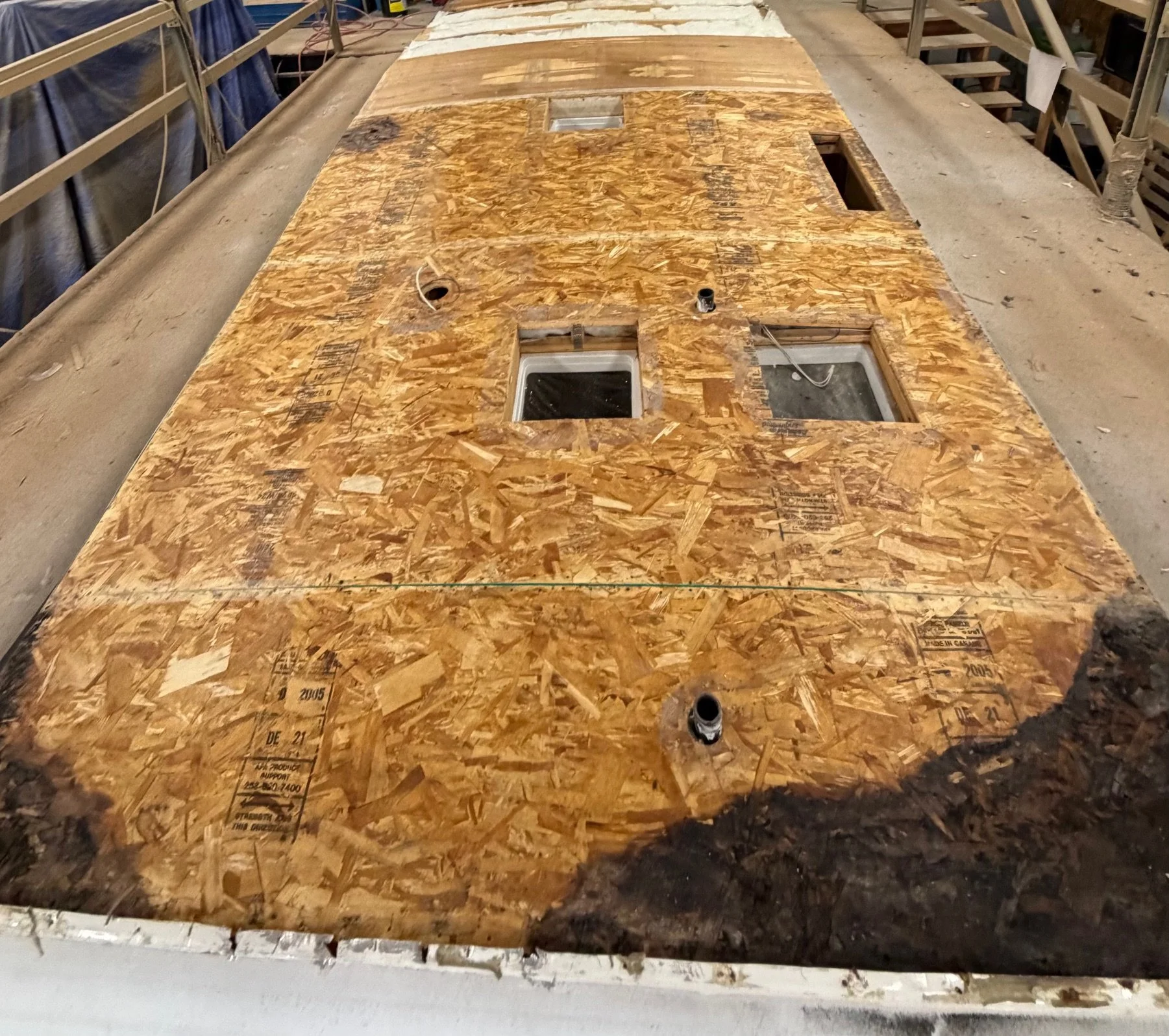
Identify hidden water intrusion
Prevent interior damage and mold
Extend the life of your roof
Avoid emergency repairs while traveling
Many leaks start small and remain hidden for months. By the time you see stains or soft spots, damage has already spread.
Recommended RV Roof Inspection Schedule
Quarterly Visual Checks (Every 3 Months)
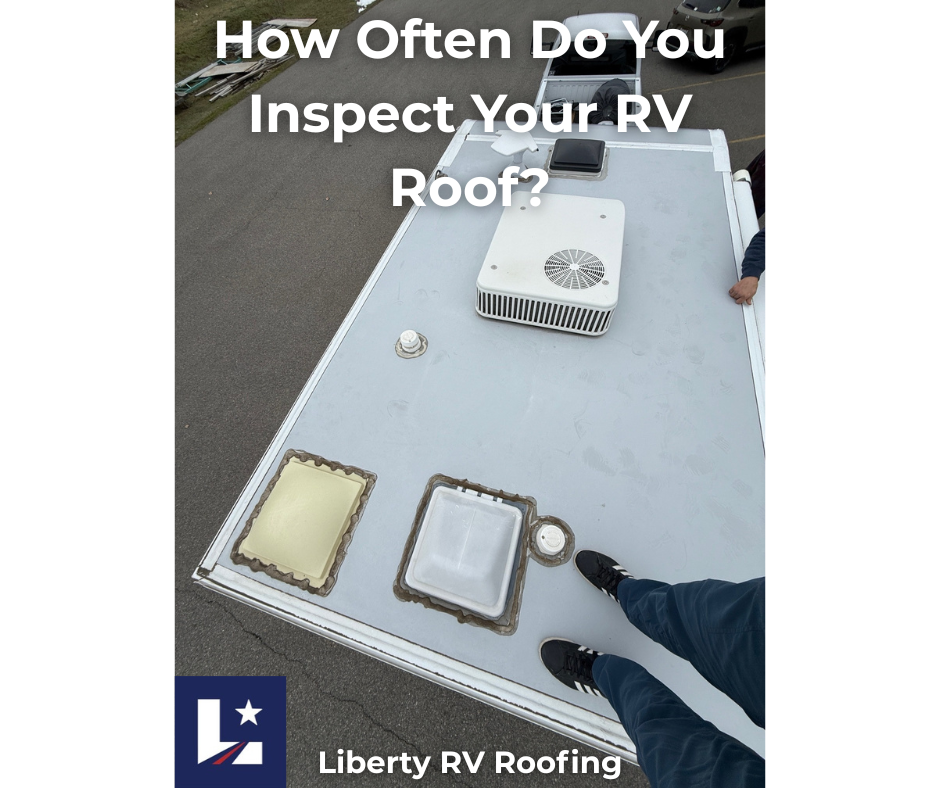
You should perform a quick visual inspection every few months, especially if you travel often.
Look for:
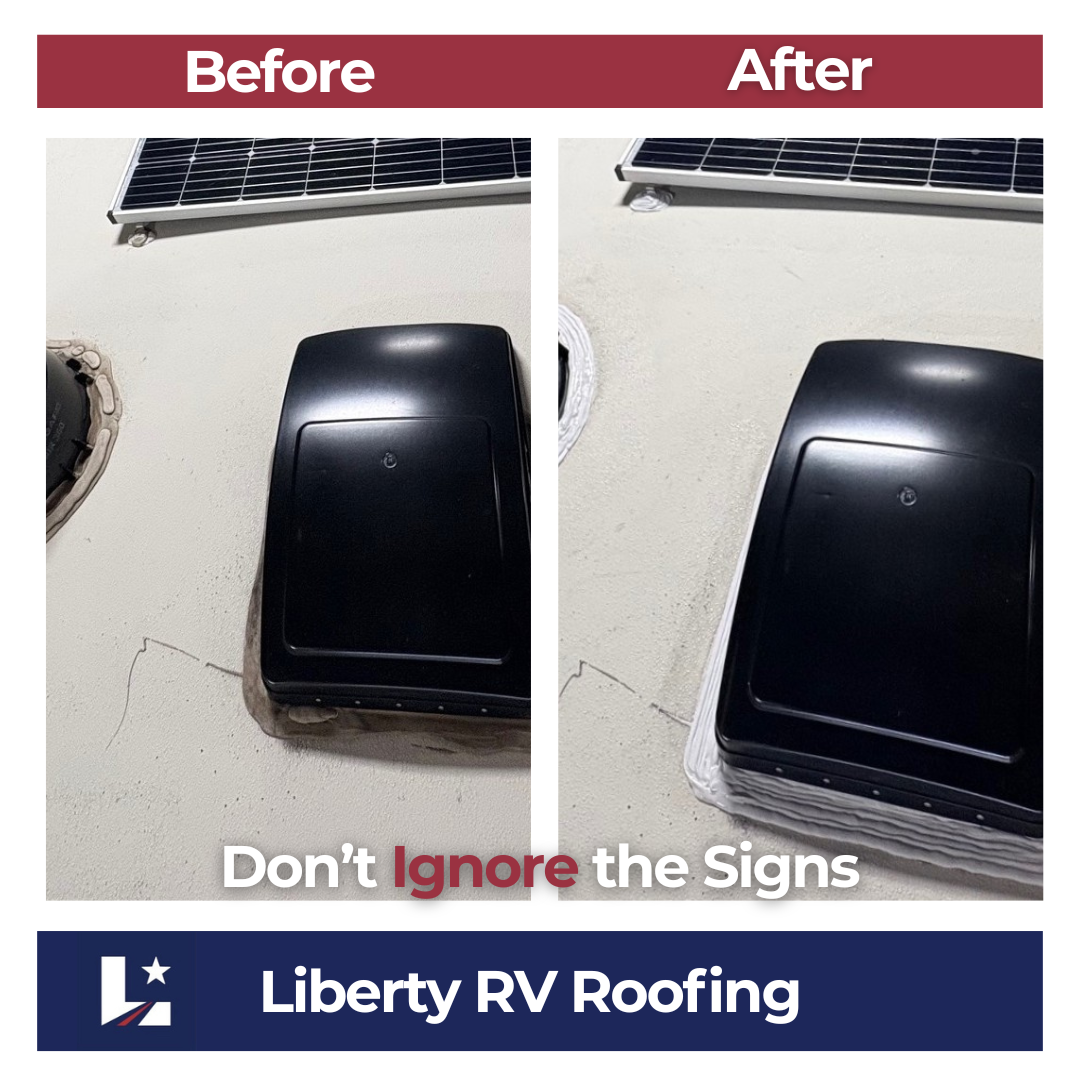
Cracked, dried or peeling sealant
Gaps around vents and skylights
Debris buildup or standing water
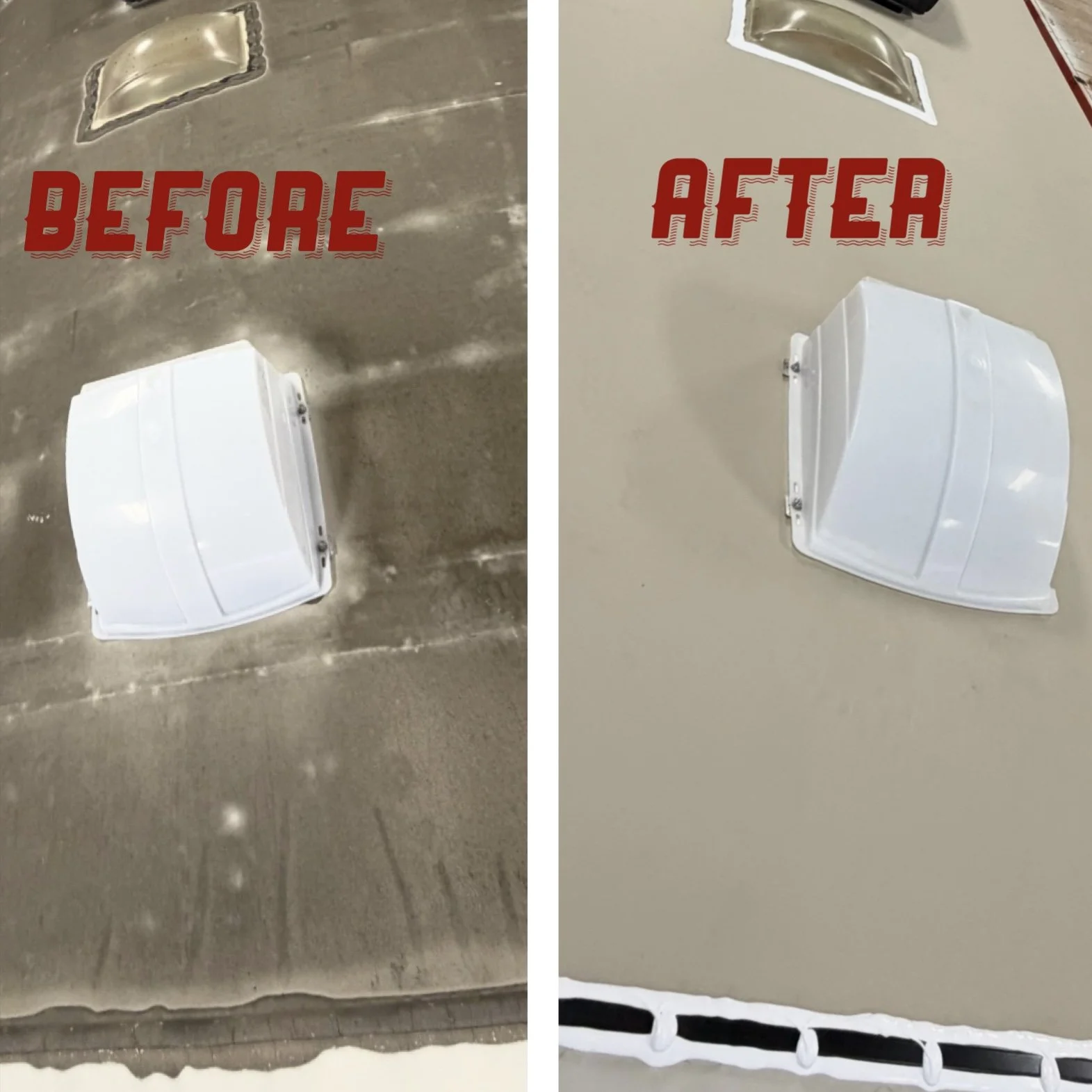
Discoloration or bubbling in roof material
Annual Professional Inspection
At least once a year, your RV should receive a professional inspection. A trained eye can spot issues you may miss, including early membrane failure or compromised seams.
Pro Tip: Annual inspections are ideal before peak travel season.
After Severe Weather
Always inspect your roof after:
Heavy rain or hail
Snow or ice accumulation
Extreme heat waves
Long road trips
Weather and vibration accelerate wear — even on newer RVs.
Signs Your RV Roof Needs Immediate Inspection
If you notice any of the following, don’t wait:
Water stains on ceilings or walls
Soft spots or sagging areas
Musty smells inside the RV
Visible cracks or separation on the roof
Loose or missing sealant
These are warning signs that water may already be entering your RV.
DIY Inspections vs Professional Inspections
DIY Inspections
DIY checks are helpful for routine monitoring, but they have limits.
Pros:
Quick and convenient
Helps spot obvious damage
Cons:
Hidden leaks often go unnoticed
Structural issues can be missed
Improper repairs can worsen damage
Professional RV Roof Inspections
Professional inspections go deeper and are designed to catch problems early.
What professionals look for:
Sealant adhesion and elasticity
Membrane wear and UV damage
Weak points at seams and edges
Early signs of water intrusion
At Liberty RV Roofing, our inspections are thorough, honest and always free.
How Inspections Prevent Costly Repairs
Most major RV roof repairs start as small, inexpensive fixes that were ignored. A cracked seal or loose seam might cost little to repair — but if left unchecked, it can lead to:
Rotted decking
Mold and mildew
Electrical damage
Full roof replacement
Routine inspections are one of the easiest ways to save thousands of dollars over the life of your RV.
Why Free RV Roof Inspections Matter
We believe RV owners should never avoid inspections because of cost. That’s why Liberty RV Roofing always offers free RV roof inspections — no pressure, no obligation.
Our goal is simple:
Help you understand the condition of your roof so you can make informed decisions.
Whether you travel full-time or just a few weekends a year, your RV roof deserves regular attention.
Schedule your FREE RV roof inspection today and travel with confidence knowing your roof is protected.